How Long Does Exterior Paint Last in Coastal Rhode Island?
Salt air, humidity, freeze-thaw cycles — coastal RI is brutal on paint. Here's what actually lasts and why some jobs need redoing in 4 years while others go 12+.
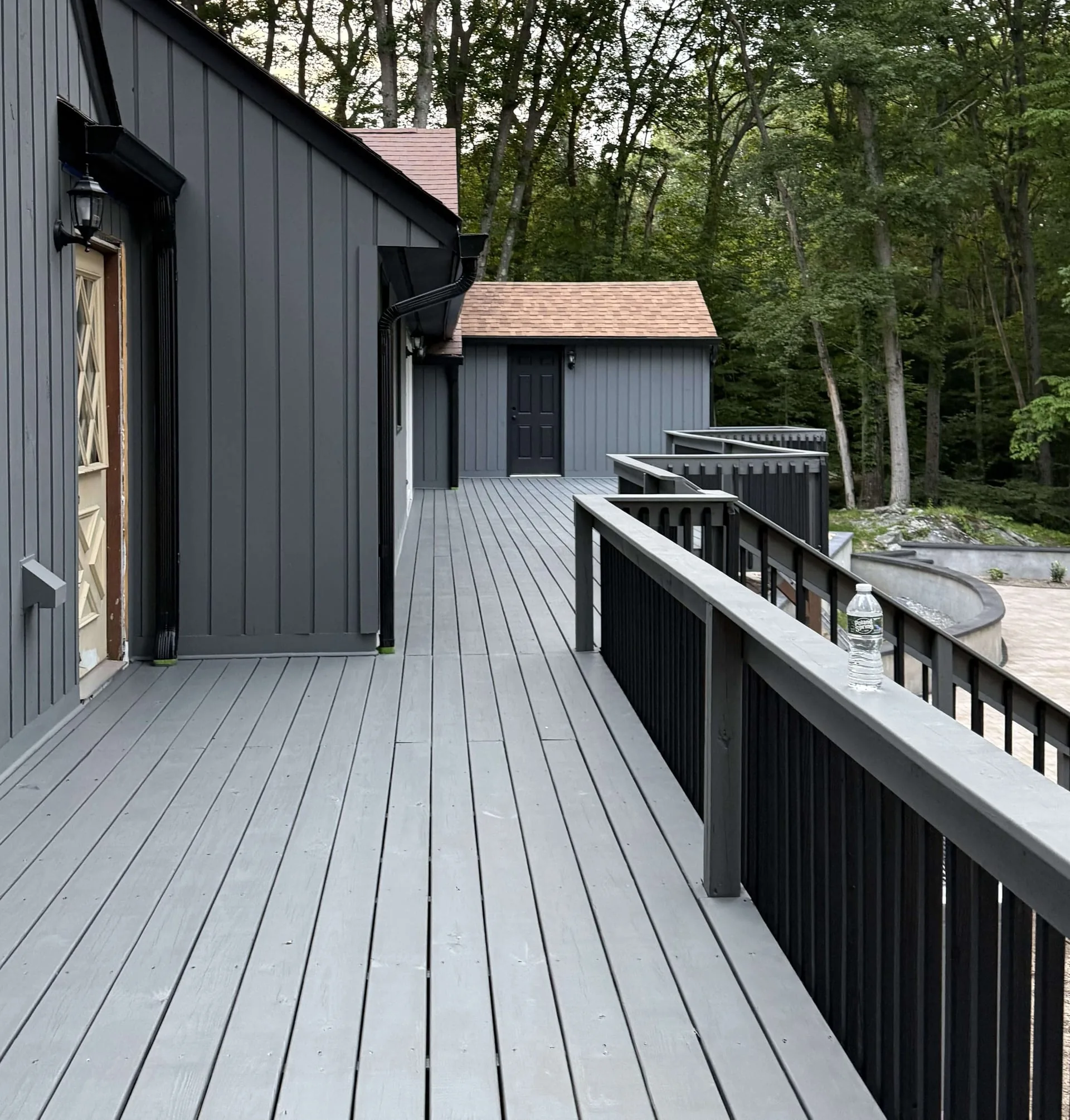
If you live in Barrington, Bristol, Warren, or anywhere along Narragansett Bay, you've probably noticed paint failing on coastal homes faster than inland properties. There's a real reason for that — and it's not the painter's fault (usually). Coastal Rhode Island is one of the most punishing climates for exterior paint in the lower 48 states, and "how long will it last?" is the most important question you can ask before spending $5,000-$15,000 on the work.
Below is what actually drives paint longevity in coastal RI, what realistic expectations look like, and what you can do to make your finish last 12+ years instead of 4.
The realistic exterior paint lifespan in coastal RI
These are real-world ranges from homes we've painted across coastal RI over the last decade:
| Siding Type | Inland (5+ mi from coast) | Coastal (within 1 mi) | Direct waterfront |
|---|---|---|---|
| Wood clapboard | 10-12 years | 7-10 years | 5-7 years |
| Cedar shingles | 8-10 years | 6-8 years | 4-6 years |
| Fiber cement (HardiePlank) | 12-15 years | 10-12 years | 8-10 years |
| Vinyl siding (paint over) | 5-7 years | 4-6 years | 3-5 years |
| Stucco | 8-12 years | 6-10 years | 5-8 years |
These ranges assume premium paint + proper prep. Cut either of those and subtract 30-50% from the lifespan.
Why coastal RI is so brutal on exterior paint
1. Salt air (the silent killer)
Salt particles in the air settle on your exterior surfaces every day. Even sites a mile inland get measurable salt deposits during onshore winds. Salt accelerates oxidation of paint binders, weakens the bond between layers, and corrodes any exposed metal flashing or fasteners. The closer to saltwater, the faster this happens.
2. UV exposure
Coastal RI gets significant sun exposure (less tree cover than inland). UV breaks down paint pigments and binders. South and west-facing walls get the brunt of this — they typically fade and chalk before north/east walls.
3. Freeze-thaw cycles
Rhode Island sees 60-80 freeze-thaw cycles per year in winter (temperatures crossing 32°F up and down). Water that's gotten into hairline cracks expands when it freezes, breaking paint bonds from the inside out. This is why even good paint jobs need touch-ups every 3-5 years on certain surfaces.
4. High humidity + mildew
Coastal RI averages 70-85% humidity in summer. North-facing walls and shaded areas (under porches, behind shrubs) get mildew growth that eats away at paint adhesion. Mildew-resistant paint additives are essential here, not optional.
5. Wind-driven rain
Nor'easters and tropical storms drive rain horizontally into wall surfaces, forcing water past flashings, around windows, and into clapboard joints. This soaks the underlying wood and pushes paint off from behind.
What separates a 12-year paint job from a 4-year one
Surface preparation (the single biggest factor)
70% of paint failures in coastal RI are prep failures, not paint failures. The proper sequence:
- Power wash at 1500-2000 PSI to remove dirt, chalk, mildew spores
- Mildew treatment (oxygen bleach or a commercial mildewcide) on shaded surfaces
- Hand scrape all loose, peeling, or failing paint
- Sand feathered edges between scraped and existing paint
- Caulk every gap, joint, nail hole with paintable polyurethane caulk
- Spot prime all bare wood and stained areas with bonding primer
- Full prime any heavily weathered surfaces or color changes
Skip any of these and you'll see early failure. Cheap painters skip 4-5 of them.
Paint quality + selection
For coastal RI, only premium 100% acrylic exterior paints will give you 8+ years:
- Sherwin-Williams Emerald Exterior — gold standard, ~$80/gal, 10-15 year warranty
- Benjamin Moore Aura Exterior — equivalent quality, ~$85/gal
- Sherwin Duration — solid mid-premium, ~$60/gal, 8-10 year life
Avoid: any paint under $50/gal for coastal exterior. The binders and pigments in cheap paint are not engineered for this climate.
Two coats minimum (always)
One coat of paint, no matter how thick, never lasts as long as two thinner coats. Two coats give the right total film thickness for proper UV resistance and water-shedding. If a contractor proposes "one coat to save money," walk away.
Carpentry repairs before painting, not skipped
Rotted clapboards, sills, and trim need to be replaced BEFORE painting. Painting over rot just hides it for a season — the rot keeps spreading and the paint fails wherever there's moisture underneath. Add $300-$1,500 for typical carpentry repairs on a Rhode Island home over 30 years old.
How to make your exterior paint last LONGER (your part)
Even with a great paint job, you can dramatically extend the life:
- Annual visual inspection. Walk around your home each spring. Look for: peeling, blistering, dark stains (mildew), exposed bare wood, caulk gaps. Catch problems early.
- Touch up small areas every 2-3 years. A $200 touch-up of fading or peeling spots beats a $7,000 full repaint when the whole finish fails together.
- Trim vegetation off siding. Bushes touching the house trap moisture against paint. Keep at least 18 inches clear.
- Clean gutters twice a year. Overflowing gutters cascade water down siding, accelerating paint failure on those surfaces.
- Wash siding annually with mild soap. Removes salt deposits, mildew spores, and dirt that accelerate breakdown.
- Re-caulk visible gaps every 3-4 years. Caulk is the weakest link — when it fails, water enters and paint behind it lifts.
- Stay ahead of roof and flashing leaks. Most "paint failures" are actually water infiltration from somewhere else.
Red flags during your repaint year
Watch for these signs your current paint job is approaching end-of-life:
- Chalking — wipe a finger across the siding. White residue = paint binders breaking down. Time to plan repaint within 12-24 months.
- Fading — colors visibly lighter on south/west walls vs north/east. Decade+ old paint typically.
- Hairline cracks in paint film, especially on south-facing walls — flexibility is gone.
- Visible peeling or blistering in any localized area — moisture issue OR paint nearing end of life.
- Mildew that won't wash off — paint surface has become porous.
- Caulk gaps wider than a pencil lead at trim joints, around windows.
If you see 2-3 of these on most exposures, it's time. Putting it off causes wood damage that's much more expensive than the paint job.
Coastal vs inland Rhode Island — does it really matter that much?
Yes. We've painted homes 6 miles inland in Cranston that hold paint for 12+ years with the same product and prep that gives us 7 years on a Barrington waterfront. The difference:
- Salt content in the air drops dramatically beyond 1-2 miles from saltwater
- Humidity is lower inland
- Wind exposure is more sheltered (more tree cover, more buildings blocking)
If you're in Barrington proper or directly on the water, plan for repaints every 6-9 years. If you're in inland Bristol or further north toward East Providence, 9-12 years is realistic with the right paint and prep.
Bottom line for coastal RI homeowners
Real coastal RI exterior paint lifespan: 7-12 years with premium paint and proper prep, 3-5 years if you cut corners on either.
The math is simple: spending $5,000 once for a 10-year paint job ($500/year) costs less than spending $3,000 every 4 years ($750/year). The "deal" usually isn't.
If you're in Barrington, Bristol, Warren, or any coastal RI town and looking at exterior painting in 2026, get quotes that explicitly include: 1500-2000 PSI power wash, scrape/sand to sound substrate, full caulking, bonding primer on bare wood, two coats of premium 100% acrylic paint (Sherwin Emerald or Benjamin Moore Aura), and a 2-year workmanship warranty. That's the real spec for a paint job that survives the climate.
Frequently Asked Questions
How often should I repaint my coastal Rhode Island home exterior?+
With premium paint and proper prep, expect 8-12 years on wood siding and 10-15 years on fiber cement (HardiePlank) in coastal RI. Within 1/4 mile of saltwater, drop those numbers by 2-3 years due to salt-air corrosion. Touch-up every 2-3 years on south and west exposures extends overall life significantly.
What's the best exterior paint for coastal Rhode Island homes?+
100% acrylic paints with UV stabilizers and mildew-resistant additives. Top picks: Sherwin-Williams Emerald Exterior, Benjamin Moore Aura Exterior, and Sherwin Duration. Avoid contractor-grade or bargain paints — coastal climate exposes their weakness within 3-4 years.
Why does my paint peel within 3 years even though it's expensive?+
It's almost always prep, not paint. Painting over chalking, mildew, moisture, or failing prior paint causes peeling regardless of paint quality. Proper prep includes power washing, scraping, sanding, bonding primer on bare wood, and full caulking. Skip any of those steps and the new paint fails fast in coastal climate.
Does the side of my house affect how long paint lasts?+
Yes, dramatically. South and west-facing walls get the most UV and weather exposure — they typically fail first (often 30-40% sooner than north and east walls). Plan for spot touch-ups on south/west sides every 3-4 years to extend the overall paint life of your home.
What's the ideal time of year to paint a Barrington or Bristol home?+
Late May through early October. Daytime temps consistently above 50°F and overnight above 35°F. Low humidity windows (typically morning hours) are ideal for adhesion. Avoid painting during hurricane season conditions or after extended rainy stretches when wood moisture content is high.
Ready for a real number on your project?
We give fixed-price written estimates within 24 hours. No surprises, no hidden fees.
Related articles
How Much Does Exterior Painting Cost in MA, RI & CT? (2026 Guide)
Real numbers from 100+ exterior painting projects — what's average, what's lowball, and what to expect for your home.
Interior Painting Cost Guide 2026 (Per Room & Per Sq Ft)
Real interior painting costs for MA, RI & CT — per room, per square foot, and what drives the number up or down.
Ready to Start Your Transformation?
Book your free consultation today. We respond within 24 hours with fixed pricing — no surprises.
Start My TransformationNo commitment required · Free estimate · Licensed & Insured